

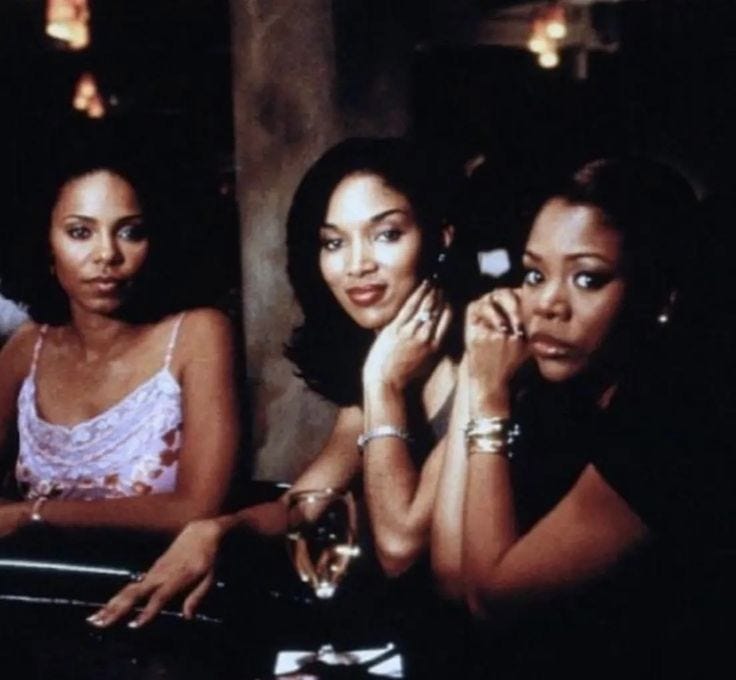
Friendship is one of the great joys of life. I believe this deeply and have written a passionate defense of the institution.
So you won’t find me parroting the current online mood that treats every friendship as something to be discarded the moment it becomes inconvenient. I believe in grace, history, and repair. Most of the time… I’ll come back to this another day.
I do also know that friendships can have a powerful and stifling effect on our identity and our outcomes, and we don’t talk about that enough.
Friends can make you braver, more curious, more open, more successful, or more interesting. They can also hold you back and keep you in a role long after you’ve outgrown it.
Sometimes you don’t lose yourself in friendship because someone was cruel. Sometimes you lose yourself because a friend, or a friend group, has decided who you are and keeps relating to that version of you.
Even when she no longer exists.
We Are Wired to Mirror
Humans are mimetic creatures. It’s one of the most well-documented yet least discussed aspects of us. Someone yawns, you yawn. Someone crosses their arms, you cross yours. Someone lowers their voice, you lower yours.
It’s involuntary. It is unconscious. It is one of the oldest tools we have for surviving in social groups.
We evolved this way because reading the room and matching the temperature of the people around us kept us safe. In small tribes, belonging was not a luxury but a matter of survival. The person who could not read the group was at risk of being pushed out.
That instinct has not disappeared. It just shows up differently now.
Maybe you don’t copy people outright. It’s subtler than that. You simply learn which parts of yourself to downplay.
You don’t tell the friends who love trap music that you have a soft spot for classic rock. You voice the opinions that echo your best friend’s and swallow the points you suspect they’ll strongly disagree with. You take on the group’s sense of humor, their references, their aesthetic. On Wednesdays, we wear pink.
If your group is skeptical of a certain kind of person, you become a little less open to them, too. If your crew values one kind of career and dismisses another, you begin to internalize that hierarchy. If your besties laugh at ambition, domesticity, faith, polish, or a slow and ordered life, you may learn to subdue your own desires for those things before anyone else can.
If you move between cultures or social worlds, befriending different kinds of people can start to feel like a betrayal you’re expected to explain.
This is not weakness, babe. It’s biology. And resisting it takes almost superhuman strength.
But left unexamined, biology becomes a cage. What began as a survival mechanism can slowly become the very thing that keeps you from becoming yourself.
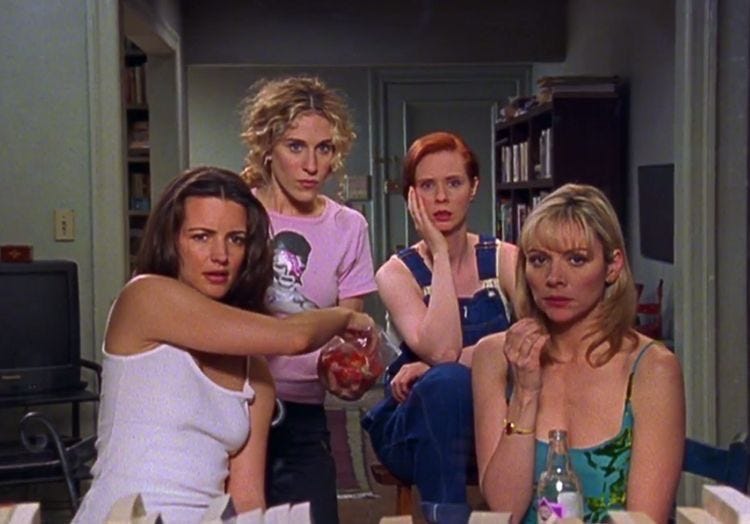
The Friends Who Keep Us in Costume
Once you know what to look for, you start to see it everywhere.
You start learning a new language, and your friends mock your pronunciation. You are actually trying to say the word the way it is supposed to be said, and the group teases you for being pretentious. So you flatten your pronunciation back down. You Anglicize the Italian dish on the menu, even though you know how to say it properly, because it is easier than dealing with the eye rolls.
You lose weight and start dressing differently, and someone jokes that you are “fancy now” or “seeking attention.” Someone comments that you never used to wear that, look in mirrors, care so much, or seem so vain.
You develop an interest in something outside the group’s shared culture. Wine. Opera. Hiking. Art. Whatever it is, they have decided it is not for people like you. So you keep it separate. Entire parts of your inner life become unavailable to the person or people who are supposed to know you best.
And sometimes the pressure is not even hostile. It usually comes wrapped in humor.
We see so much content now around “rebranding yourself” and “just becoming who you want to be.” The message is seductive. You have free will. Do what you want. Be who you want.
And yes, in theory, that is true.
But I often wonder how many people, in their real lives, actually feel empowered or encouraged to do that.
It is easy to say, “Forget anyone who doesn’t understand or support you,” as if loneliness is not real. As if companionship is not a human need. As if everyone is strong enough to tell a friend or a group to go to hell and happily eat dinner alone.
Some people like and need companionship. Most of us do.
So we adjust. We flatten. We keep certain things to ourselves.
And slowly, without quite noticing, we stay legible to the group at the expense of becoming legible to ourselves.
The Man They Could Not See
A few years ago, I was brought to a fabulous home in Italy.
The setting was absurdly beautiful. The kind of day where you pinch yourself and wonder how you got here.
At some point, I was introduced to a man I had never met before.
He was striking. Handsome, stylish, confident, interesting. Someone you noticed immediately.
Because I had no history with him, I simply saw the man in front of me.
But as the day went on, I realized that in this group of childhood friends, he was not seen that way at all.
To them, he was still the goofy nerd.
Maybe he once was. But whatever he had become, they simply could not update the file. They laughed when I said, “My God, who is that?”
His success was explained away. His style was giggled at.
They couldn’t see what I, a newer friend, saw. I saw a handsome, successful, intriguing man. They saw the boy they had known years before.
His current identity did not match their old story, and I wondered when he would tire of the teasing.
A few years later, he was divorced from the wife who came from that same old group, and he was around those friends less and less.
Of course he was. I’m never surprised when I hear that someone has slowly disappeared from a tight-knit old friend group. I always know why.
Everyone has some version of this story.
Maybe you were the quiet one. The wild one. The fat one. The broke one. The third wheel. The perpetually single one. The mess.
And then one day, you are no longer that person.
But some people keep handing you the old costume and expecting you to put it back on.
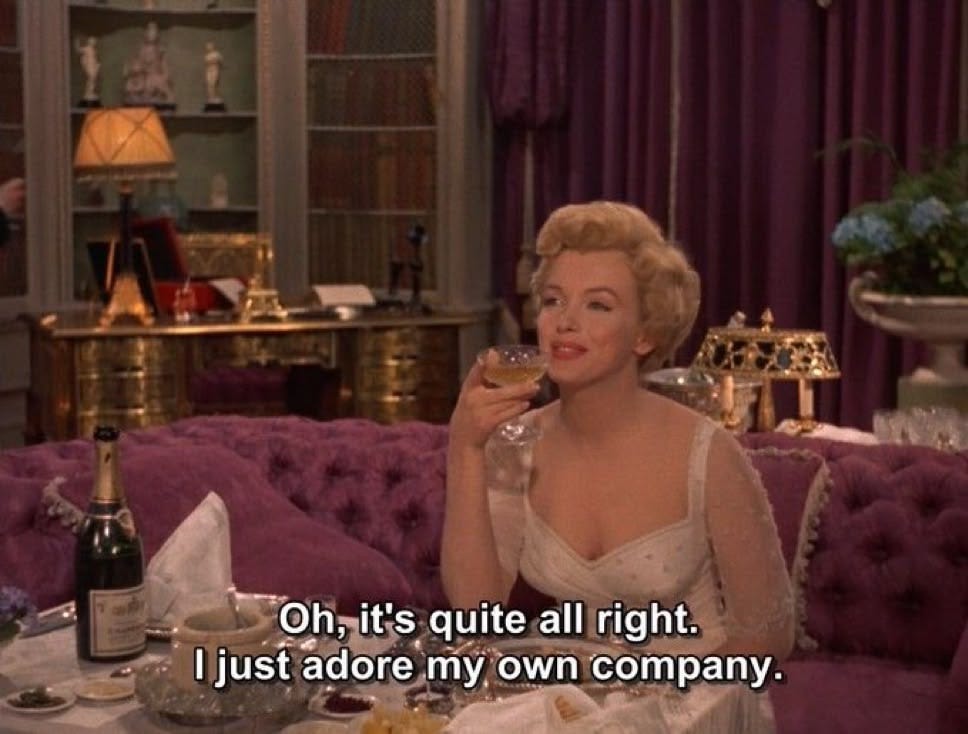
When You Become a Two-for-One
There is another way your identity can be formed for you through friendship.
This version is not about friends preventing you from growing, but your identity being absorbed into someone else’s.
When I was much younger, I had a friend I was attached to at the hip. We did everything together. We were invited everywhere together. We were talked about as a unit.
We both had big personalities. We were friendly, outgoing, social. At first, it was fun to have our names almost fused together in people’s minds. There is something intoxicating about that kind of closeness when you are young. The built-in companion. The person who makes entering rooms easier.
But over time, cracks started to appear.
Because, of course, we were not actually a package.
We were different people. Different instincts. Different judgment. Different ways of moving through the world.
And eventually, I began to feel uncomfortable being automatically associated with things I had not done, choices I had not made, and behaviors I did not necessarily want attached to me.
My identity was no longer entirely mine.
The association became heavy.
I share this because I think it happens more than we admit, especially between close female friends, especially when you’re young, and your identity is still forming.
There is nothing wrong with a close friendship. Some of the great friendships of our lives are intense, formative, and deeply intertwined.
But if people cannot picture you outside of the friendship, pay attention.
If you are always described as part of a “we” instead of an “I,” pay attention.
If other people cannot form an opinion of you separate from their opinion of your friend, pay attention.
If people stop inviting you to things because they assume you come with an automatic plus-one, pay attention.
Your identity is a resource. Do not lend it out permanently.
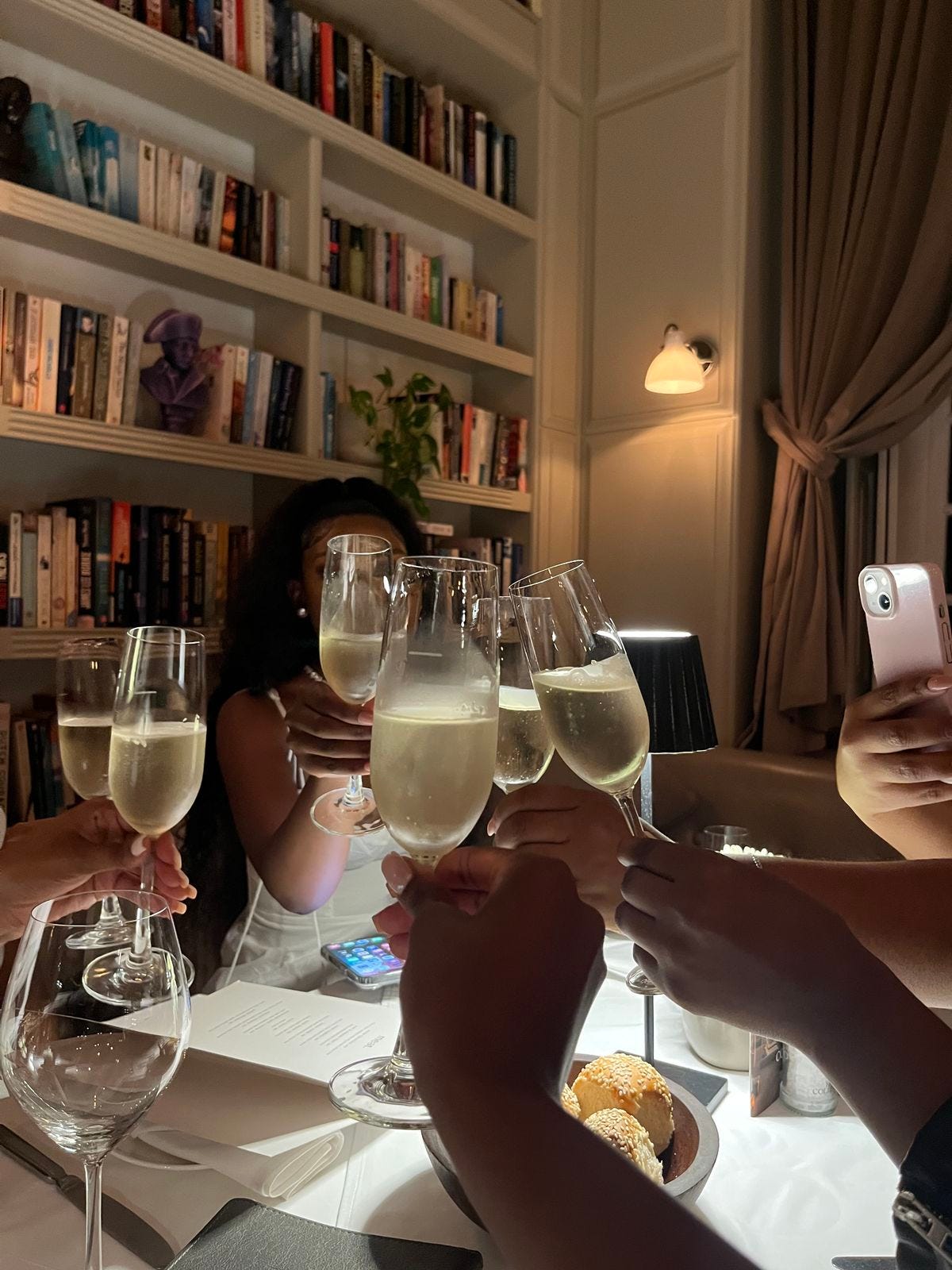
Change the Room, Change the Mirror
I don’t want to suggest that the answer is always to leave your friendships.
Sometimes the answer can be to change rooms.
When I moved from New York to Europe, something changed in a way I didn’t anticipate. I had wonderful friends in New York. They were not holding me back. In fact, I wish I had some personalities like theirs here in Zurich, but that is another story for another day.
What felt liberating was starting over in a place where no one knew any version of me.
I didn’t take it as an opportunity to create a new persona. It wasn’t that dramatic. I just loved not arriving with expectations already attached to me.
I rarely wear makeup now. I started doing braids again. I go out without long extensions or wigs. No one had ever told me I needed those things. I just felt they were part of the Nony everyone knew.
In Europe, nobody had a fixed idea of who I was.
I could speak beginner French badly. I could befriend people who would not have made sense with my old identity.
That freedom is one I wish everyone could experience in some form.
So if you’re looking for ways to coax out your inner self, consider changing the room.
Sometimes that means a new city, a new hobby, a class where nobody knows you, or a solo trip. Sometimes it means saying yes to someone or something you would normally say no to.
The gaze of people who know you can be a gift. It can also become a mirror that only shows you who you used to be.
When Things Get Shaky
If you’re in the middle of a change, and your friendship(s) feel different, don’t panic.
The wobble is not always the end.
Groups adjust. People need time. Your friend or friends may need a moment to understand your new relationship, new body, new ambition, new standards, new faith, new softness, new seriousness.
A little awkwardness doesn’t mean everyone is against you. But there is a difference between adjustment and punishment. Between teasing and humiliation. Between being embraced and isolated.
There is a difference between remembering who you were and refusing to see who you are.
So ask yourself:
Do I share good news freely, or do I shrink it down first?
Do I hide new interests because I already know the joke that will come?
Do I feel allowed to become more? More beautiful, more ambitious, more peaceful, more disciplined, more loved?
Do I feel allowed to become different?
And most importantly:
Do these friendships have enough elasticity to hold the person I’m becoming?
Because the good friends will stretch.
They may tease you a little. They may need time. You are giving them new information after all. Allow them to stumble and get used to the changes. But eventually, they will update the file.
The ones who can’t will reveal themselves too.
And you’ll know what to do with that information.
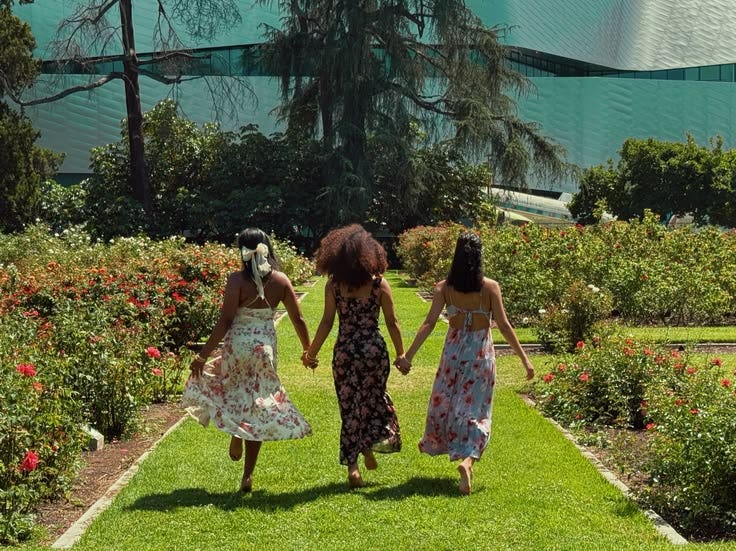
I Was Just Wondering If You’d Come Along
Some friends will love the version of you they got used to more than they love the version of you that is becoming.
That is not always a moral failure. It’s human. It’s worth naming, grieving, and accepting so you can keep moving forward.
But do not put the new pronunciation away or stop dressing the way you now want to dress. Do not apologize for becoming more disciplined, more discerning, more joyful, more serious, more feminine, more successful, more yourself.
Some friends will come with you.
And guess what?
You’ll make some new ones who match the new you.
This is part three of my five-part series on losing yourself and finding your way back. In The Women We Accidentally Become, I wrote about the false versions of ourselves we slip into in relationships. In The Prison With the Golden Bars, I wrote about getting pulled in by work, by prestige, and professional inertia. Still to come: the countries we move to and the identities we leave behind, and what happens when we stop taking care of ourselves altogether.
🔥👏🏾🔥👏🏾🔥